Beyond the Bun: Unlocking Creative Potential with Burger Clipart
In the fast-paced world of digital marketing and visual content creation, finding assets that offer both versatility and charm can be a challenge. When you are working on a project that requires a touch of whimsy or a clear culinary theme, generic stock photos often fall short. This is where high-quality vector-style illustrations come into play. Specifically, having a dedicated collection of Burger Clipart Illustrations allows for a level of customization that static images simply cannot match. It is not just about finding a picture of a burger; it is about having the individual components—the bun, the patty, the lettuce, the sauce—to construct the perfect visual representation of your specific message.
The Anatomy of a Perfect Visual Asset
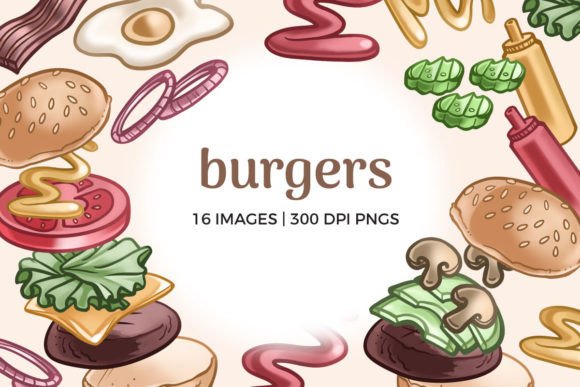
At first glance, a clipart collection might seem like a simple set of images, but the value lies in the details and the format. The collection in question consists of 16 high quality Burger Cliparts, each designed with a clean, illustrative style that appeals to a modern audience. The visual personality of these graphics strikes a balance between playful and professional. They are not overly cartoonish to the point of being childish, nor are they so photorealistic that they lose their artistic flair. This makes them incredibly adaptable for various contexts, from a serious food blog to a fun children’s menu.
The technical specifications are just as important as the aesthetic. These assets are provided as 300 DPI transparent PNG files. For the uninitiated, DPI stands for "dots per inch," and 300 is the gold standard for print quality. This means you can use these graphics on printed materials like flyers, posters, or packaging without the image becoming pixelated or blurry. The transparent background is equally crucial; it allows the burger elements to be layered seamlessly over any background color or pattern without an awkward white box surrounding them. Each clip art is roughly 6 by 6 inches, providing ample resolution for most standard design applications, though they can be scaled down easily for web use.
Assemble Your Own Narrative
The true power of this collection is the concept of modularity. The prompt to "Assemble your own burger" is not just a sales hook; it is a design philosophy. By having separate assets for the bun, ketchup, mustard, cheese, bacon, and other toppings, you gain total creative control. This approach transforms the user from a passive consumer of stock art into an active art director.
Imagine you are designing a logo for a gourmet burger joint that prides itself on its secret sauce and double cheese. With this collection, you can build a burger that visually emphasizes exactly those ingredients. Conversely, if you are creating content for a health-focused brand, you can assemble a burger loaded with lettuce and tomatoes, omitting the bacon and heavy sauces. This level of specificity helps in reinforcing brand identity and visual hierarchy. You guide the viewer's eye to exactly what matters most to your narrative.
Furthermore, the ability to separate elements creates dynamic compositions. Instead of a static, centered burger, you can have ingredients floating around the text, creating a sense of movement and energy that is highly effective in social media graphics and web design. This fluidity is something that rigid stock photography struggles to achieve.
Practical Applications for Designers and Marketers
For the graphic designer, these assets are a time-saver. Instead of spending hours in Adobe Illustrator trying to draw a realistic-looking sesame seed bun or a melting slice of cheddar, you have a library of ready-made elements. This allows for rapid prototyping and a faster turnaround time for client projects.
Small business owners and entrepreneurs will find immense value in the commercial utility. Consider a pop-up restaurant or a food truck needing quick signage. These cliparts can be dropped into Microsoft Word or Canva to create professional-looking menus, loyalty cards, or social media posts in minutes. The style of the illustrations—clean lines and vibrant colors—communicates freshness and quality, which subconsciously influences how customers perceive the food.
For bloggers and content creators, specifically in the food niche, consistency is key. Using these illustrations as a recurring visual motif across your website, Pinterest pins, and newsletter headers helps build a recognizable aesthetic. Because the collection includes 16 different variations, you have enough variety to keep your visuals fresh without straying from your established style guide.
Integrating Clipart into Modern Typography and Layouts
When working with design assets like this, the relationship between image and text is vital. These burger illustrations work exceptionally well as "drop caps" or section breakers in editorial design. For example, in a magazine layout or a long-form blog post about summer grilling, a small, high-quality illustration of a mustard bottle can serve as a visual anchor, breaking up the monotony of text blocks.
Pairing these graphics with the right typeface is where the design truly comes to life. Because the clipart has a friendly, approachable vibe, it pairs well with handwritten fonts or script fonts for headers, provided the script is legible. For body text, a clean sans serif font is recommended to maintain readability against the playful nature of the illustrations. Avoid overly ornate serif fonts or heavy display fonts that might compete with the visual complexity of the burger toppings.
Key Considerations for Usage
- Color Harmony: While the clipart comes with its own colors, advanced users can use hue/saturation adjustments in Photoshop to tweak the cheese or lettuce colors to match specific brand palettes.
- Scale and Proportion: Be mindful of the 6-inch sizing. While perfect for print, ensure you optimize the file size for web use to keep page load times fast.
- Composition: Don't just stack the ingredients in a straight line. Overlap the cheese slightly over the bun to create depth and a more appetizing look.
Value Proposition for the Creative Professional
In the realm of digital assets, the distinction between "free" and "premium" often comes down to usability and licensing. This collection represents a premium font and asset approach to clipart. You are paying for the curation and the isolation of the graphics. The assurance that the graphics "will not include the watermark" and are displayed as individual files means you are buying a tool, not just a picture.
For marketers, this is an investment in agility. Campaigns often need to be pivoted quickly. Having a modular set of burger ingredients means you can rapidly create assets for a "Burger of the Month" promotion without commissioning new artwork every time. You simply swap out the bacon for an egg, and you have a new visual for a breakfast burger campaign.
Ultimately, these Burger Clipart Illustrations are more than just pictures of food; they are building blocks for storytelling. They allow crafters to make personalized gifts, publishers to illustrate cookbooks, and brand strategists to flesh out a visual identity. By focusing on high-quality, transparent, and modular assets, you empower yourself to produce professional, engaging, and delicious-looking content that resonates with your audience.