Timeless Florals for Your Creative Desk
There is a specific kind of magic found in old natural history books—the kind where the pages are slightly foxed, the ink has settled into the paper fibers, and the flowers seem to hold their breath, preserved perfectly for centuries. If you work in design, publishing, or creative marketing, you know that finding high-quality, authentic vintage assets is difficult. Most stock imagery looks sterile or digitally manufactured. This is precisely why I was drawn to the Vintage Botanical Illustrations set. It isn't just a collection of images; it is a curated archive of 18th and 19th-century specimen studies that bring immediate depth and narrative to any project.
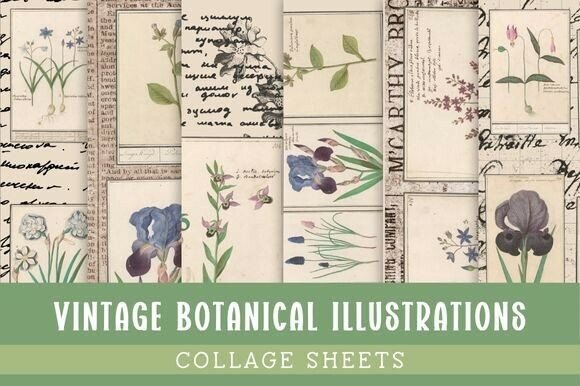
As a creative professional, your toolkit defines your output. Whether you are a scrapbooker layering textures in a junk journal or a brand strategist designing packaging for an artisanal tea company, the assets you choose dictate the emotional response of your audience. The Vintage Botanical Illustrations package offers eight high-resolution, printable collage sheets that act as a bridge between the digital world and the tactile history of print.
Visual Characteristics: The Beauty of Imperfection
What makes this set stand out in a sea of digital design assets is its commitment to authenticity. These aren't modern vector drawings trying to look old; they are authentic public-domain florals, leaves, and stems. The visual personality is defined by the "vintage patina" and aged paper tones. You will notice the subtle yellowing of the paper and the distinct line work characteristic of copperplate engraving and lithography.
Unlike modern, sterile stock photos, these illustrations possess a texture that feels organic. The personality is quiet, scholarly, and romantic. For a designer, this style is incredibly versatile. It doesn't scream for attention like a neon geometric pattern; instead, it draws the viewer in with intricate details. This makes the Vintage Botanical Illustrations an excellent choice for projects requiring a "lived-in" aesthetic. They evoke the charm of old specimen albums, providing a sense of history and permanence that modern digital art often lacks.
Strategic Applications Across Industries
The utility of these sheets goes far beyond simple crafting. In my experience, assets with this level of historical texture perform exceptionally well across various sectors. Here is how different professionals can leverage them:
- Branding and Packaging Design: For small business owners in the wellness, skincare, or artisanal food industries, these illustrations are gold. They provide an instant "heritage" feel. Imagine using these florals on a soap wrapper or a candle label. It suggests that the product is natural, hand-crafted, and rooted in tradition. It is a subtle form of brand storytelling.
- Editorial and Publishing: Bloggers and publishers can use these as background textures for text-heavy pages. Because the illustrations are high-resolution (300 DPI), they print beautifully in letter size. They work perfectly as chapter headers or margins in self-published books, adding a professional polish that elevates the publication.
- Web and Digital Design: In the digital space, flat design is giving way to "neo-skeuomorphism" and textured interfaces. Using a subtle botanical background on a website landing page can break the monotony of solid color blocks. It adds warmth to a digital experience, making a brand feel more approachable and less corporate.
- Mixed Media and Crafting: For the hobbyist and journaler, the possibilities are tactile. The high contrast of the ink allows for easy "fussy cutting." You can isolate a specific rose or fern to create a focal point on a scrapbook page. The aged paper tones blend seamlessly with other ephemera, such as old stamps or handwritten letters.
Influencing Brand Perception and Hierarchy
Design is rarely just about decoration; it is about communication. The choice to use Vintage Botanical Illustrations influences how your audience perceives your message. When you pair these images with a clean serif font or a modern sans serif typeface, you create a visual hierarchy that feels sophisticated. The contrast between the organic, hand-drawn nature of the botanicals and the clean lines of modern typography creates a dynamic tension that is visually engaging.
This style communicates authenticity. In a marketing context, using these assets can signal to your audience that you value quality and attention to detail. It helps build a brand identity that feels established rather than fleeting. For entrepreneurs, this is a subtle way to build trust. If your social media graphics or email newsletters use these consistent, high-quality vintage textures, your brand begins to feel cohesive and recognizable.
Practical Guidance for Implementation
If you are considering adding these to your creative arsenal, here is some practical advice on how to get the most out of them:
- Evaluating Project Fit: These illustrations have a strong personality. They work best for brands or projects that want to convey nature, history, elegance, or organic quality. If you are designing for a hyper-futuristic tech startup, this might not be the right fit. However, for a vintage clothing line or a botanical garden event, it is perfect.
- Font Pairing Strategies: To avoid looking dated in a negative way, pair the vintage florals with modern typography. A bold, geometric sans serif font can ground the delicate floral illustrations, making the design feel contemporary. Alternatively, a classic serif font can lean into the historical aesthetic for a timeless look. Avoid overly complex script fonts that might get lost in the busyness of the botanical details.
- Testing and Layering: Don't just slap the image onto a page. Use the "Multiply" blending mode in your design software to layer the botanicals over other colors or textures. This allows the paper grain and vintage tones to interact with your background color, creating a truly custom look. You can also desaturate them slightly to match a specific color palette.
- Commercial Use: For designers creating client work or products for sale, these assets offer immense value. Because they are high-resolution JPGs, they are ready for print-on-demand services. You can use them to create digital planners, printable wall art, or merchandise like tote bags and mugs.
Final Thoughts on Texture and Storytelling
In a world saturated with generic stock photography, Vintage Botanical Illustrations offers a return to craftsmanship. It is a set of design assets that doesn't just fill space—it tells a story. Whether you are a crafter looking for the perfect ephemera for your next journal spread or a marketer building a brand identity for a luxury product, these 18th and 19th-century studies provide the texture, depth, and sophistication needed to make your work stand out. They remind us that good design often looks backward to move forward.