Scandi Folk Art Dog Illustrations: Nordic Charm for Modern Spaces
A Whimsical Blend of Tradition and Personality
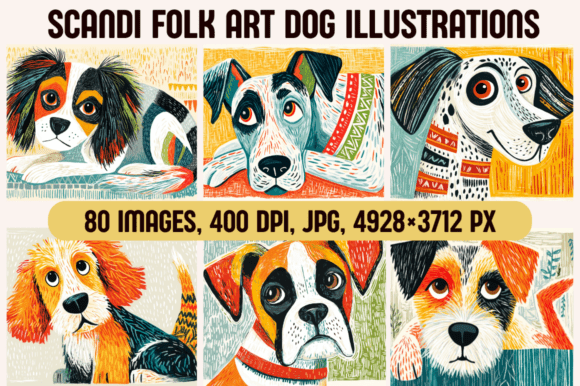
There's something undeniably heartwarming about the way Scandinavian design balances simplicity with soul. Scandi Folk Art Dog Illustrations captures that balance beautifully, offering a collection of canine portraits that feel both timeless and refreshingly modern. Each image draws from the rich tradition of Nordic folk art—think hand-carved wood textures, rhythmic geometric patterns, and a fearless approach to color—while giving every dog breed a distinct, expressive character that leaps off the page.
What makes this collection stand out is its commitment to personality. A Brittany Spaniel gazes out with soulful, contemplative eyes rendered in soft teal and ochre. A Dachshund stretches across the frame in bold coral stripes that echo the playful geometry of traditional Swedish rosemaling. These aren't generic pet portraits. They're carefully crafted illustrations where every brushstroke, pattern, and color choice serves a purpose: to celebrate the unique spirit of each breed while honoring the aesthetic language of Scandinavian folk traditions.
The palette itself deserves attention. Teal, ochre, coral, and charcoal form the backbone of the collection, creating a cohesive visual thread across all 80 images. These colors work together effortlessly, offering warmth without overwhelming a space. Whether you're drawn to the earthy groundedness of ochre or the quiet energy of coral, the tones feel curated rather than arbitrary—a hallmark of thoughtful design work.
Where These Illustrations Truly Shine
As someone who works with design assets regularly, I find that the best collections are the ones that solve real creative problems across multiple contexts. Scandi Folk Art Dog Illustrations does exactly that. The versatility here is genuinely impressive, and it starts with the sheer scope: 20 breeds, four unique images per breed, totaling 80 high-resolution files at 400 DPI and 4928 × 3712 pixels. That resolution means these files work beautifully for large-format printing, editorial layouts, and digital applications without any loss of clarity.
For nursery decor and children's spaces, these illustrations are a natural fit. The geometric patterns and friendly color palette feel age-appropriate without being childish. A gallery wall featuring a Golden Retriever, a Pug, and a Cocker Spaniel in coordinating folk art styles creates a cohesive, cheerful environment that parents and kids both enjoy. The bold shapes and high contrast also make them visually engaging from a distance—important in rooms where little eyes are still learning to focus.
Small business owners and entrepreneurs in the pet industry will find these illustrations particularly useful. Think about branding for a dog grooming studio, a pet bakery, or a boutique pet supply shop. Using one of these portraits as a centerpiece for a logo design, packaging design, or social media graphics immediately communicates warmth, playfulness, and a sense of craft. The folk art aesthetic signals handmade quality and attention to detail—exactly the associations many pet-focused brands want to cultivate.
For bloggers, publishers, and content creators, the collection offers practical editorial value. A lifestyle blog covering pet adoption, home styling, or Scandinavian design trends could use these images as featured illustrations, header art, or social media content. At 400 DPI, they reproduce crisply in both digital and print contexts, making them suitable for magazine layouts, book covers, or zine projects where image quality is non-negotiable.
Design Principles at Work
From a design perspective, what's happening in these illustrations is worth unpacking. The hand-carved texture effect creates a tactile quality that digital art often lacks. It suggests imperfection, warmth, and human touch—qualities that resonate deeply in an era saturated with polished, algorithm-generated imagery. When you place one of these prints on a gallery wall next to clean, modern typography or minimalist furniture, the contrast creates visual interest and anchors the space with a sense of authenticity.
The geometric patterns layered into each portrait also serve a functional design purpose. They create visual rhythm, guiding the viewer's eye across the composition and adding depth without clutter. This is a technique borrowed directly from Nordic folk art traditions, where repetitive motifs—stars, diamonds, floral abstractions—were used to decorate everything from furniture to textiles. In this collection, those same motifs frame and accentuate each dog's features, turning a simple portrait into a layered visual narrative.
Color consistency across the collection is another strength worth noting. Whether you're displaying a single print or curating a multi-piece gallery wall, the shared palette of teal, ochre, coral, and charcoal ensures everything feels unified. This kind of built-in cohesion is a significant time-saver for designers and crafters who need assets that work together without extensive color correction or reworking.
Practical Guidance for Using the Collection
When incorporating Scandi Folk Art Dog Illustrations into a project, start by considering the emotional tone you want to set. The playful geometry and warm colors lean cheerful and approachable, which makes them ideal for brands and spaces that prioritize friendliness and approachability. If your project calls for something more austere or corporate, these illustrations might work better as accent pieces rather than primary visual elements.
For print projects like posters, postcards, or merchandise, the high resolution gives you considerable flexibility. A single illustration can be printed at poster size without any pixelation, and the bold color blocks reproduce well across different printing methods—offset, digital, and even screen printing for textiles. If you're creating a product line, the consistent style across all 80 images means you can offer variety while maintaining a cohesive brand identity.
For digital applications, consider how the illustrations scale on different screens. The strong silhouettes and high-contrast patterns read well at smaller sizes, making them suitable for social media profile images, website icons, or app graphics. At larger sizes, the textural details become more apparent, rewarding closer inspection—a quality that works beautifully for hero images, landing page banners, or digital magazine features.
If you're pairing these illustrations with typography, lean toward clean, modern typefaces. A simple sans serif font lets the folk art details take center stage, while a slightly rounded serif font can echo the warmth of the hand-drawn textures. Avoid overly decorative or script fonts, which can compete with the already rich visual complexity of the illustrations. The goal is complement, not competition.
A Collection That Earns Its Place
What ultimately makes Scandi Folk Art Dog Illustrations valuable isn't just the aesthetic appeal—it's the combination of thoughtful design, practical versatility, and genuine emotional resonance. These are illustrations that dog lovers connect with immediately, that designers can deploy across a wide range of projects, and that hold their quality at every scale. Whether you're decorating a nursery, building a pet brand, or curating content for a design-savvy audience, this collection offers something that's both visually distinctive and functionally reliable.
The 20 breeds covered span a wide range of sizes and personalities, from the compact charm of a Chihuahua and the dignified presence of a Great Dane to the scruffy energy of a Jack Russell Terrier and the regal grace of a King Charles Cavalier Spaniel. That breadth means most dog lovers will find their breed represented, which is a meaningful detail for personal projects, client work, or retail applications where breed specificity matters.
In a market crowded with generic clip art and overused stock imagery, these illustrations stand apart by doing something specific and doing it well. They honor a design tradition, celebrate a beloved subject, and deliver practical value across real-world applications. That's the kind of design asset worth investing in.