Capturing the Ocean's Gentle Giant: Humpback Whale Vector Art
The Anatomy of a Premium Vector Asset
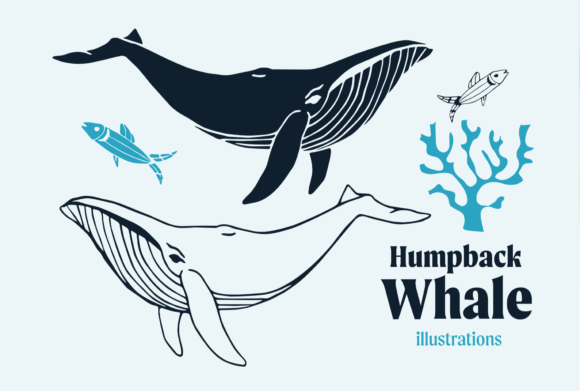
When you're building a brand or crafting a visual campaign, the difference between a generic stock image and a piece of high-quality art is often the difference between being overlooked and being remembered. This is exactly where high-end Humpback Whale Vector Illustrations come into play. We aren't talking about a simple clipart blob here. We are discussing meticulously crafted design assets that blend the beauty of nature with the precision of modern typography and vector graphics. These illustrations usually feature two distinct styles: the bold, dramatic silhouette shape and the intricate, expressive outline line art. The silhouette offers a punchy, high-contrast look perfect for branding, while the line art brings a softer, more organic feel that works beautifully for editorial and textile design.
The visual personality of these assets lies in their duality. On one hand, you have the raw power of the ocean captured in a solid black shape; on the other, you have the delicate details of small coral and fish interacting with the whale, adding context and depth. For a designer, having access to a fully editable eps file compatible with older software like Illustrator 9 is a massive practical advantage. It ensures that whether you are working on legacy systems or the latest Creative Cloud updates, you can manipulate anchor points, adjust stroke weights, and recolor the palette without losing fidelity. This level of editability transforms a static image into a flexible component of a larger brand identity.
Strategic Applications for Branding and Marketing
How do you actually use these assets to drive engagement? The versatility of Humpback Whale Vector Illustrations makes them a powerhouse for logo design. A whale represents depth, intelligence, and calm strength—traits that many organizations want to project. By using the silhouette shape, you create a strong focal point that scales down perfectly to a favicon or a social media profile picture. However, if you are a boutique hotel, a marine conservation group, or a high-end seafood restaurant, the hand drawn vector illustrations style offers a more bespoke, artisanal vibe. It signals to your audience that your brand values craftsmanship and attention to detail.
Beyond logos, consider the impact on packaging design. Imagine a line of sustainable soap or eco-friendly packaging where the outline line art of the whale, coral, and fish wraps around the box. It creates a narrative without needing paragraphs of text. For social media graphics, these vectors are invaluable. You can drop the png with transparent background directly into Canva or other web-based editors to create quick, professional-looking posts. This workflow is essential for small business owners and entrepreneurs who need to produce high-volume content without compromising on the professionalism of their visual hierarchy.
Technical Integration and Design Workflow
A common pain point for creatives is asset compatibility. The inclusion of a png with transparent background alongside the vector files is a thoughtful touch that acknowledges how modern content creators work. While web design and print production demand the scalability of vector illustrations, many bloggers, crafters, and hobbyists rely on drag-and-drop tools. Being able to import a high-resolution PNG into a mockup generator or a design tool like Canva without worrying about clipping masks saves significant time. It allows for rapid prototyping when testing how a specific graphic interacts with different background textures or color schemes.
Furthermore, these assets function exceptionally well in collages and mixed-media projects. If you are working on editorial design—perhaps a magazine layout or a book cover—the line art elements can be used as watermarks or background textures to add depth to a layout. The ability to isolate the small coral and fish elements from the main whale vector gives you granular control over your composition. You can scatter the coral to frame a block of text or use the fish to lead the viewer's eye across the page. This modularity is what separates standard stock assets from truly useful design assets.
Evaluating Fit and Visual Hierarchy
Choosing the right illustration style is about more than just aesthetics; it's about visual hierarchy. A bold, solid whale silhouette will naturally dominate a composition, making it ideal for hero images or headers where you need immediate impact. Conversely, the outline line art is more subtle. It works best when you want to evoke a feeling of tranquility or complexity without overwhelming the main message. In terms of font pairing—though we are discussing illustrations, the principle holds—the organic curves of a whale vector pair beautifully with clean, geometric sans serif fonts. The contrast between the natural, flowing shape of the marine life and the rigid structure of a modern typeface creates a balanced visual tension that is pleasing to the eye.
For those considering commercial licensing, it is vital to ensure the assets you choose are cleared for your specific use case, whether it's for merchandise, digital products, or client work. High-quality vectors usually come with licenses that allow for extensive modification, which is crucial for maintaining a unique brand identity. Ultimately, incorporating Humpback Whale Vector Illustrations into your toolkit is about elevating the narrative quality of your work. It moves your projects away from the generic and toward the evocative, helping you connect with your audience on a deeper, more visual level.